





 POOJA SEVA
Kaal Bhairav Puja with 2 Priests in Ujjain – Protection & Blessings
Rs. 16,501.00per booking
View Puja 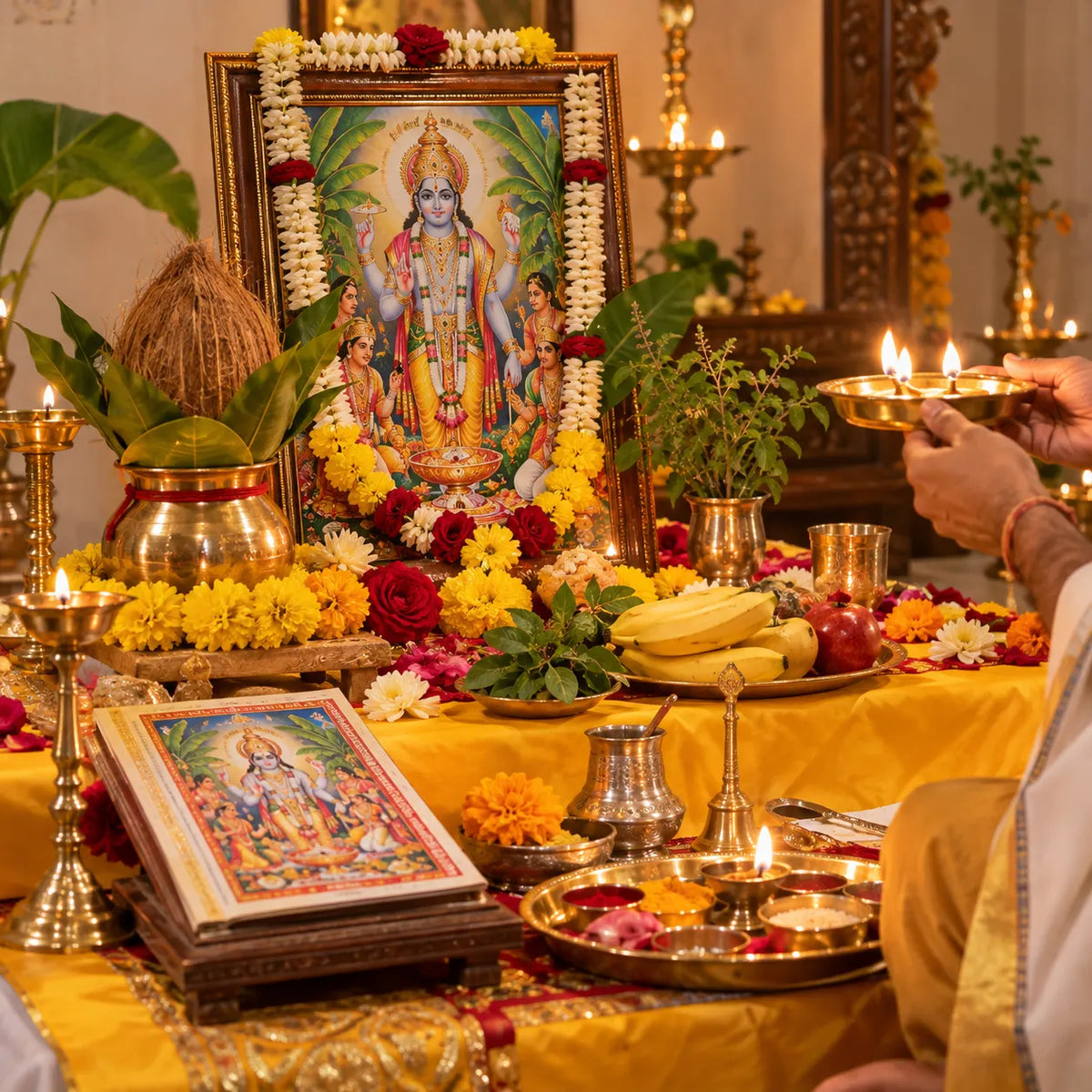
Read the venue, ritual and inclusions before booking. Images are for reference.
Near Maa Lalita Devi Mandir, Meerapur, Prayagraj, Uttar Pradesh
Selected add-ons are extra. Final charges are shown at checkout.
Up to 5 names in your sankalpAdd participant names; gotra is optional.
Choose your preferred dateSelect a preferred date. After booking, our team will contact you to confirm the final date.
Photos & video updatesPhotos or video on WhatsApp within 3–4 days after the pooja, where permitted for this booking.
Seek the divine blessings of Bhagwan Shri Satyanarayan, a revered form of Lord Vishnu, through the traditional Satyanarayan Katha & Puja near Maa Lalita Devi Mandir in Prayagraj, Uttar Pradesh.
Shri Satyanarayan Katha is one of the most widely performed devotional ceremonies in Hindu households. It includes the worship of Bhagwan Vishnu as Satyanarayan and the recitation of the sacred Satyanarayan Vrat Katha.
Devotees perform this ceremony to express gratitude, fulfil devotional vows and seek blessings for family happiness, peace, prosperity and auspicious beginnings.
With Dharmik Dev, families can request a personal Satyanarayan Katha performed by a local priest near Maa Lalita Devi Mandir, Meerapur, Prayagraj, with a sacred Sankalp in their name and Gotra.
Shri Satyanarayan is a revered form of Bhagwan Vishnu, the protector and preserver in Hindu religious traditions.
The word Satya means truth, while Narayan refers to Lord Vishnu.
Worship of Bhagwan Satyanarayan is associated with devotion to truth, righteousness, gratitude and spiritual discipline.
Devotees offer prayers to Satyanarayan Bhagwan for the well-being of their families and to express gratitude for blessings received.
Satyanarayan Katha is a traditional religious narrative recited during the worship of Bhagwan Satyanarayan.
The Katha is traditionally associated with the Skanda Purana, particularly the Reva Khanda tradition.
The ceremony includes worship of Lord Vishnu, sacred prayers, the reading of Satyanarayan Vrat Katha and appropriate devotional offerings.
The Katha traditionally conveys teachings about truthfulness, devotion, keeping one's promises, gratitude and living a righteous life.
Families often arrange Satyanarayan Katha during important events or after the fulfilment of a devotional vow.
Devotees perform Satyanarayan Katha with prayers for harmony, understanding, happiness and the well-being of family members.
Lord Satyanarayan is traditionally worshipped with prayers for stability, prosperity and an auspicious household.
Families arrange this ceremony as a way to thank Bhagwan Vishnu after an important achievement, a happy occasion or the fulfilment of a prayer.
Satyanarayan Puja is commonly performed during Griha Pravesh, weddings, anniversaries and before starting a new venture.
Some devotees perform Satyanarayan Katha after a Mannat or religious vow as an expression of gratitude and faith.
The Katha encourages reflection on truth, devotion, humility and the importance of fulfilling one's responsibilities.
These spiritual benefits reflect Hindu religious traditions. No particular financial, health, personal or other outcome is guaranteed.
The ceremony begins with a Sankalp performed in the devotee's name and Gotra, expressing the family's prayer intention.
Traditional prayers may be offered to Lord Ganesha at the beginning of the ceremony according to the priest's Puja Vidhi.
The priest performs worship of Bhagwan Vishnu in His Satyanarayan form with traditional prayers and appropriate offerings.
The sacred Satyanarayan Katha is recited according to the confirmed religious tradition.
It is commonly presented in five chapters, conveying the importance of truth, devotion, gratitude and fulfilment of vows.
Traditional offerings may include Tulsi leaves, Panchamrit, fruits, bananas and a sweet offering such as Panjiri or Sheera.
The exact materials are determined by the confirmed Puja Vidhi.
Devotional Aarti may be performed at the conclusion of the Katha.
The ceremony concludes with prayers for family well-being, prosperity, peace and divine blessings.
Maa Lalita Devi Mandir is a revered Hindu temple in the Meerapur area of Prayagraj, Uttar Pradesh.
The temple is dedicated to Maa Lalita, a revered form of the Divine Mother, and is traditionally regarded by devotees as a Shakti Peetha.
Prayagraj is an important Hindu pilgrimage city, widely known for the sacred Triveni Sangam.
Families visit Prayagraj to participate in religious ceremonies and seek blessings during important occasions.
Although this Satyanarayan Katha is dedicated to Bhagwan Vishnu, the reference service is arranged in the spiritually significant area near Maa Lalita Devi Mandir.
The ceremony is performed at a ritual venue near the temple, not inside the temple premises.
The exact location will be confirmed before the booking is finalised.
Shri Satyanarayan Katha may be performed on any suitable date.
Traditional and popular occasions include:
Purnima (Full Moon Day)
Ekadashi
Griha Pravesh
Weddings and wedding anniversaries
Birthdays
Before starting a new business or venture
After the fulfilment of a Mannat or devotional vow
Other meaningful family occasions
The actual ceremony date and dur
Choose your puja and share your sankalp details. After booking, our team will contact you to confirm the final date and coordinate your seva.
Explore the puja, venue, ritual, inclusions and booking price.
Add up to 5 names, optional gotra and your preferred date. Review the details before payment.
After booking, our team confirms the final date with you and coordinates the ritual as described.
Photos or video on WhatsApp within 3–4 days after the puja, where permitted for your booking.
Your participant names and optional gotra.
Help with your booking and date confirmation.
Read your seva inclusions before booking.
Photos or video where permitted for your booking.
Explore another seva and read the ritual, venue and inclusions before booking.
POOJA SEVA
 POOJA SEVA
Shri Mahakaleshwar Jyotirlinga, Ujjain, Madhya Pradesh
 POOJA SEVA
Shri Mahakaleshwar Jyotirlinga, Ujjain
 POOJA SEVA
Shri Mangalnath, Ujjain, Madhya Pradesh
 POOJA SEVA
Near Shri Chintaman Ganesh Mandir, Ujjain, Madhya Pradesh
 POOJA SEVA
Near Shri Rinmukteshwar Mahadev Mandir, Ujjain, Madhya Pradesh
 POOJA SEVA
Near Navgraha Shani Mandir, Triveni, Ujjain, Madhya Pradesh
 POOJA SEVA
Near Navgraha Shani Mandir, Triveni, Ujjain, Madhya Pradesh
 POOJA SEVA
Vikrant Bhairav Mandir, Ujjain, Madhya Pradesh
 POOJA SEVA
Maa Pratyangira Devi, Ujjain, Madhya Pradesh — exact venue to be confirmed
 POOJA SEVA
Angareshwar Mahadev or Mangalnath, Ujjain, Madhya Pradesh
 POOJA SEVA
Vikrant Bhairav Mandir, Ujjain, Madhya Pradesh
Check the designated venue and ritual details before booking.
Know exactly what your booking includes before you book.
Photos or video apply where listed in your booking inclusions.
Contact our team on WhatsApp for booking assistance.